
DISCOVER JAPAN SITES AI
Ask in your language. Get answers with context, not just keywords.
Welcome. What would you like to know?
Why this matters
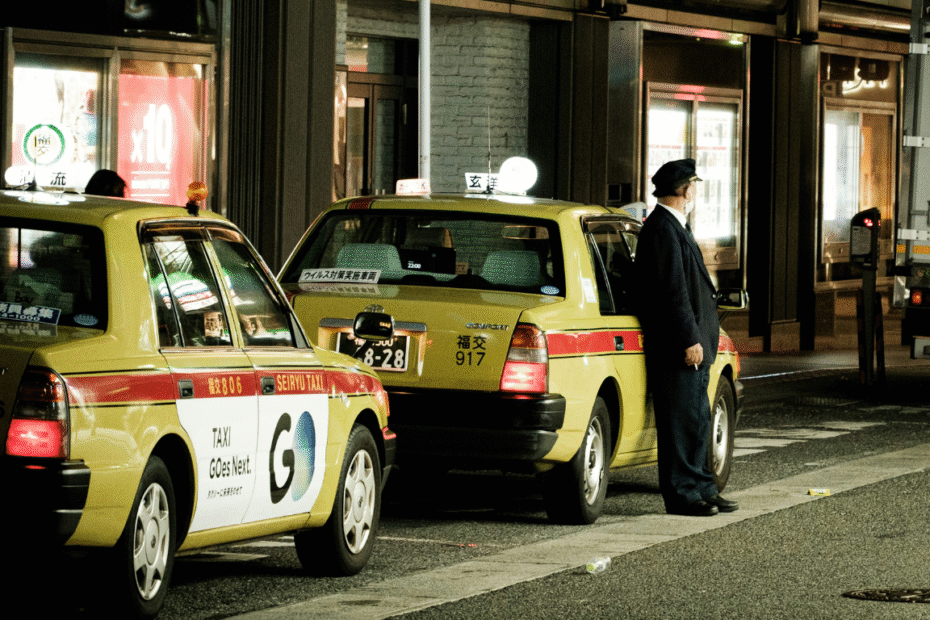
In Japan, taxis are known for being clean, safe, punctual, and highly professional. They are more expensive than public transport, but in the right situation — late nights, heavy luggage, rainy weather — they can be the smartest choice.
Travel Intelligence Update — October 10, 2026
This guide preserves its original 2025 travel advice while updating Tokyo taxi fares effective April 20, 2026, the current taxi-booking applications, additional app charges, and Japan’s regulated ridesharing system. Fares and service availability may differ by region.
Official Taxi Fares in Tokyo (MLIT-regulated)
In Japan, taxi fares are regulated within approved fare structures overseen by the Ministry of Land, Infrastructure, Transport and Tourism (MLIT) and its regional transport bureaus. This provides a framework for transparency, although fares vary by region and service.
Important 2026 change: New fares took effect on April 20, 2026, in Tokyo’s 23 wards, Musashino, and Mitaka. The initial fare remains ¥500, but it now covers a shorter distance than in 2025.
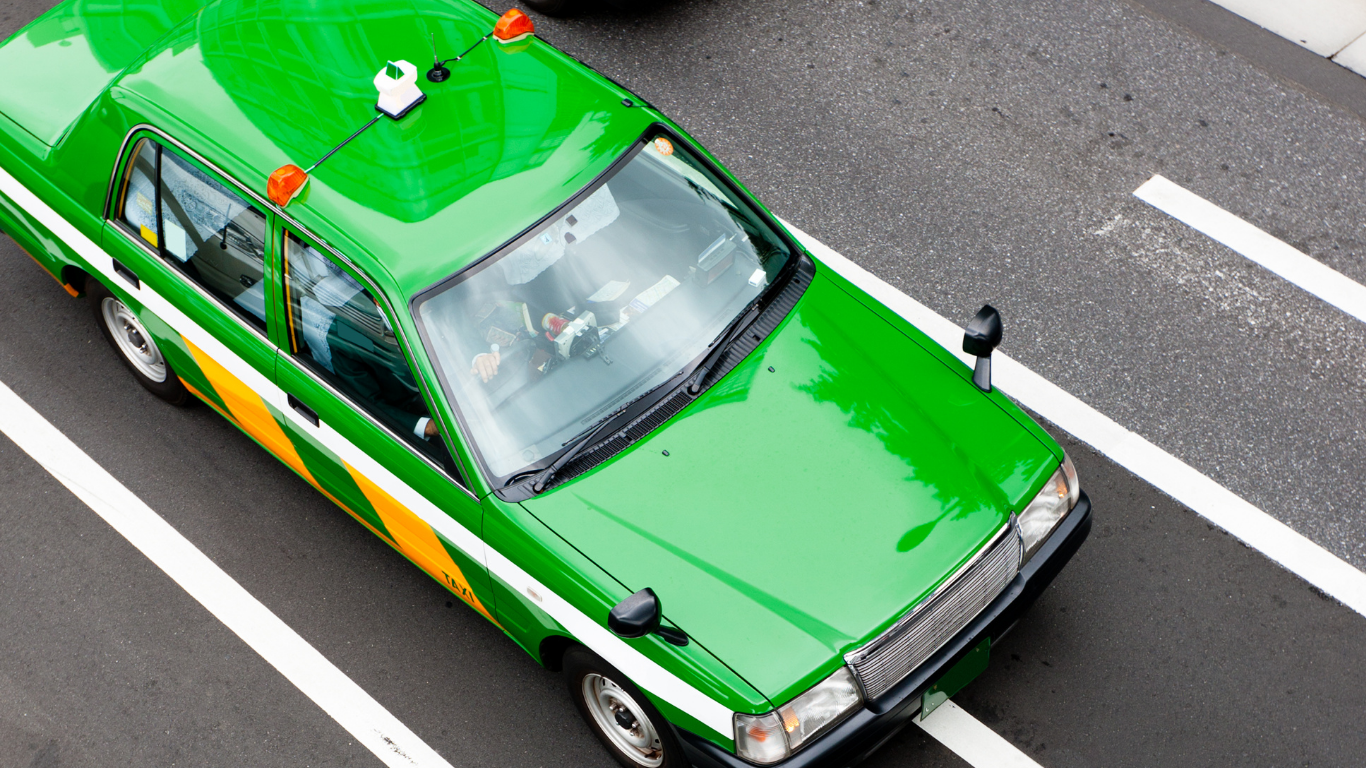
- Minimum Fare (Flag Drop): ¥500 for the first 1.0 km.
- Additional Distance: ¥100 for each additional 232 meters.
- Waiting / Slow Traffic Charge: When the taxi travels at 10 km/h or less, ¥100 for each accumulated 85 seconds, under the applicable time-distance calculation.
- Night Surcharge: +20% from 10:00 p.m. to 5:00 a.m.
- Tolls (Expressways): Normally added to the passenger’s fare when toll roads are used.
- Pick-up and Reservation Fees: Additional charges may apply when a taxi is dispatched or booked in advance.
What changed? In 2025, the initial ¥500 covered 1.096 km and the additional ¥100 increment covered 255 meters. Since April 20, 2026, those distances have been reduced to 1.0 km and 232 meters respectively.
The ¥500 starting amount did not increase, but some trips can now cost more because the meter advances after shorter distances.
Official reference: Tokyo Individual Taxi Association — Official Fare Table (April 2026).
Regional distinction: These figures apply to Tokyo’s 23 wards, Musashino, and Mitaka. The Tama area has a separate fare schedule, and cities such as Osaka, Kyoto, and Sapporo may use different rates.
While many regions calculate taxi fares using a combination of distance and time, there is no single taxi price schedule for all of Japan.
Group travel tip: Splitting a taxi between three or four passengers can sometimes make short urban trips competitive with other transport options, especially when traveling with luggage. Always compare the total taxi fare with the combined public transport cost.
Luggage and Passenger Rules
- Standard taxis may accommodate two or three large suitcases, depending on the vehicle, luggage dimensions, and number of passengers. Capacity is not guaranteed.
- Minivan and larger taxi services may be available for families, groups, or bulky equipment, particularly through airport and reservation services.
- Drivers often assist with loading luggage, although assistance depends on the vehicle and circumstances. Tipping is not customary.
- Seatbelts are required for all passengers, including passengers in the rear seats.
Etiquette and Payment
- Automatic Doors: Many Japanese taxis have a rear passenger door operated by the driver. Allow the driver to open and close it when the vehicle is equipped with this system.
- Cash or Card: Many taxis in major cities accept Visa, Mastercard, JCB, and sometimes IC cards such as Suica or PASMO. Acceptance varies by operator. In rural areas, carry cash.
- Receipts: Ask for a receipt by saying “Ryōshūsho o kudasai” (領収書をください). Keep it in case you forget belongings or need to contact the taxi company.
- No Tipping: Tipping is generally not expected. Paying the displayed fare is sufficient.
Where & How to Get a Taxi
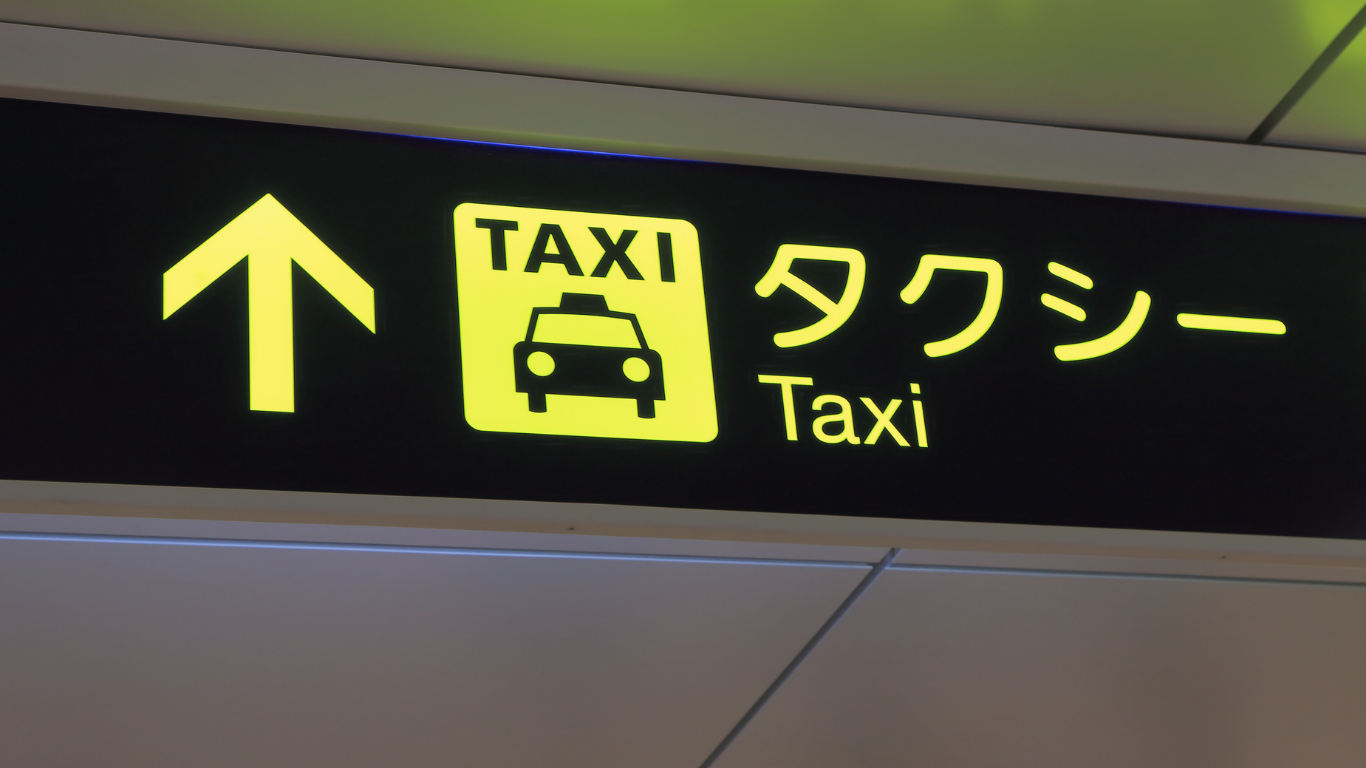
- Taxi Stands (乗り場, Noriba): Located at many railway stations, airports, hotels, and major commercial facilities. A practical option for travelers unfamiliar with local taxi services.
- Street Hailing: Look for a taxi displaying 空車 (kūsha, vacant). Display colors vary by company and vehicle; do not rely exclusively on red or green signs.
- Apps: GO, Uber Taxi, DiDi, and S.RIDE are examples of taxi-booking services available in participating areas. Check current coverage and conditions.
- Hotels and Restaurants: Staff can often help call a taxi or arrange a reservation, although pick-up or reservation charges may apply.
2026 application update: The original JapanTaxi application ended service on January 31, 2023. Its official successor is GO. Travelers should not rely on the old JapanTaxi app.
Official announcement: GO Inc. — JapanTaxi App Service Termination and Successor Information.
Street Taxi vs. App Booking: Watch for Additional Charges
The amount displayed on a taxi meter is not necessarily the total cost of an app-booked journey.
Depending on the operator, location, and booking conditions, a taxi app may add pick-up, reservation, handling, or service charges.
| Booking Method | Possible Charges | What to Check |
|---|---|---|
| Taxi stand / street hail | Meter fare, tolls, and applicable night surcharge | Check the meter and payment methods |
| Phone or hotel booking | Meter fare plus possible dispatch or reservation fees | Ask whether there is a pick-up charge |
| Taxi-booking app | Fare plus possible pick-up, app, handling, reservation, or other charges | Review the complete fee breakdown before confirming |
According to GO’s pricing information revised in July 2026, applicable charges may include a ¥100 app service fee, a ¥100 handling fee for certain in-car payment arrangements, and a ¥200 international service charge under specified conditions.
Other charges or discounts may depend on demand, location, reservation type, and available services. Some fees do not apply to every journey.
Before booking, check the fee details displayed inside the app rather than assuming that the estimated meter fare is the final amount.
Official source: GO — Official Pricing and Additional Charges.
Peak Demand Situations
- Rainy Days: Expect heavier demand and potentially longer lines at taxi stands.
- Late Nights: After the last trains stop, demand can rise sharply in nightlife districts. Train schedules differ by line and station.
- Holidays and Events: Fireworks festivals, New Year shrine visits, Golden Week, and major concerts may increase waiting times.
Travel tip: Consider booking ahead when availability is especially important, but check reservation charges and cancellation conditions.
Uber in Japan: Why It’s Different
Uber operates differently in Japan from the unrestricted private-driver model familiar to travelers in some other countries.
Traditional taxi services remain regulated, and Uber Taxi works with licensed taxi companies.
However, Japan has also introduced a regulated system that allows certain private vehicles and nonprofessional drivers to provide passenger transport under taxi-company supervision.
- Regulated Taxi Services: Licensed taxi operators continue to provide conventional taxi services under Japanese transport regulations.
- Japan-Style Ridesharing: Introduced in 2024, this system permits approved taxi companies to manage services using eligible private vehicles and general drivers in designated areas and under specified conditions.
- Uber Taxi: Primarily connects passengers with taxi services operated by licensed taxi companies. The available service category can vary by location.
- Other Apps: GO, DiDi, and S.RIDE also provide booking services in supported areas, with different availability and fee arrangements.
Important distinction: Japan-style ridesharing is not unrestricted private transportation. Participating private vehicles and drivers operate under the management of authorized taxi companies and within the conditions established by transport authorities.
The system is intended to supplement taxi capacity where and when additional transport is needed.
Official sources: MLIT — Taxi Services and Japan-Style Ridesharing and Kanto Transport Bureau — Japan-Style Ridesharing.
Practical Advice
- Best Times to Use Taxis:
- Short rides with heavy luggage.
- Late-night or early-morning journeys when public transport is unavailable.
- Bad weather or travel involving mobility needs.
- How to Communicate:
- Show the driver your destination in Japanese. A Google Maps location pin or the full address is often helpful.
- Use polite phrasing: “[place] made onegaishimasu” (“To [place], please”).
Taxi Travel Essentials in Japan (2026)
- Base Fare (Tokyo 23 wards, Musashino, Mitaka): ¥500 for the first 1.0 km; +¥100 per additional 232 meters; ¥100 per accumulated 85 seconds at 10 km/h or less under the applicable meter calculation.
- Night Surcharge: +20% from 10 p.m. to 5 a.m. Expressway tolls may be added.
- Luggage: Suitcase capacity depends on the vehicle and number of passengers. Arrange a larger vehicle when necessary.
- Etiquette: Let the driver operate automatic doors where fitted. Seatbelts are required.
- Payment: Cash and major credit cards are common in cities; IC card acceptance varies. Carry cash in rural areas.
- Finding a Taxi: Use station or airport taxi stands, hail an available taxi, or book through GO, Uber Taxi, DiDi, or S.RIDE in supported areas.
- Uber and Ridesharing: Uber Taxi connects passengers with licensed taxi operators. Japan-style ridesharing also permits eligible private vehicles under taxi-company supervision.
- App Charges: Review dispatch, booking, service, and international-use fees before confirming a ride.
Tip: Sharing a taxi with three or four passengers can be economical for certain short trips. Compare the full fare, including any booking fees, with your other transport options.
Taxi FAQ in Japan (2026) — Practical Questions & Useful Japanese
Quick answers to real traveler questions. Copy the Japanese phrases to your phone and show them to the driver if needed.
Can I ask the driver to take the highway? Who pays tolls?
Phrase: 「高速道路を使ってください」 (Kōsoku dōro o tsukatte kudasai) — Please use the expressway.
Can I request the cheapest or fastest route?
Cheapest: 「一番安い道でお願いします」 (Ichiban yasui michi de onegai shimasu).
Fastest: 「一番早い道でお願いします」 (Ichiban hayai michi de onegai shimasu).
How do I show my destination correctly?
Phrase: 「ここまでお願いします」 (Koko made onegai shimasu) — Please take me here.
Useful: 「この住所です」 (Kono jūsho desu) — This is the address.
Can I make a stop on the way to pick up a friend or buy something?
Phrase: 「途中で一度止まってください」 (Tochū de ichido tomatte kudasai) — Please stop once along the way.
And: 「ここで20分待ってください」 (Koko de nijuppun matte kudasai) — Please wait here for 20 minutes.
For a long stop, should I keep the taxi waiting or call another one?
To end here: 「ここで精算してください」 (Koko de seisan shite kudasai) — Please settle the fare here.
To request another taxi later: 「あとでタクシーを呼んでください」 (Atode takushī o yonde kudasai) — Please call a taxi later.
Airport flat fares: can I ask for them?
Phrase: 「空港の定額料金は使えますか?」 (Kūkō no teigaku ryōkin wa tsukaemasu ka?) — Can I use the fixed airport fare?
Wheelchair access or assistance?
Phrase: 「車いす対応のタクシーを予約したいです」 (Kurumaisu taiō no takushī o yoyaku shitai desu) — I would like to reserve a wheelchair-accessible taxi.
Child seats — are they provided?
Phrase: 「チャイルドシート付きはありますか?」 (Chairudo shīto-tsuki wa arimasu ka?) — Is a vehicle with a child seat available?
Can I adjust the air conditioning or open a window?
Cooler: 「もう少し涼しくしてください」 (Mō sukoshi suzushiku shite kudasai) — Please make it a little cooler.
Warmer: 「もう少し暖かくしてください」 (Mō sukoshi atatakaku shite kudasai) — Please make it a little warmer.
Window: 「少し窓を開けてもいいですか?」 (Sukoshi mado o akete mo ii desu ka?) — May I open the window a little?
What if I leave something in the taxi?
Phrase: 「タクシーに忘れ物をしました」 (Takushī ni wasuremono o shimashita) — I left something in the taxi.
Accident or injury — am I covered?
If there is an accident, seek medical help when needed, contact the police, and keep the receipt and vehicle details.
Police: 110. Ambulance: 119.
Accident: 「交通事故です」 (Kōtsū jiko desu) — There has been a traffic accident.
Injured: 「けがをしました」 (Kega o shimashita) — I am injured.
Company information: 「会社名と連絡先を教えてください」 (Kaishamei to renrakusaki o oshiete kudasai) — Please tell me the company’s name and contact details.
Night availability and safety for solo travelers?
Phrase: 「駅前のタクシー乗り場はどこですか?」 (Ekimae no takushī noriba wa doko desu ka?) — Where is the taxi stand in front of the station?
What if the meter seems wrong or the route feels unusual?
Phrase: 「別の道でお願いできますか?」 (Betsu no michi de onegai dekimasu ka?) — Could we take another route?
And: 「料金を確認させてください」 (Ryōkin o kakunin sasete kudasai) — Please let me confirm the fare.
Can I pre-book a taxi for early morning trains or flights?
Phrase: 「明日の〇時にタクシー予約をお願いします」 (Ashita no ○-ji ni takushī yoyaku o onegai shimasu) — Please arrange a taxi for tomorrow at [time].
Three most useful expressions (quick copy)
1. 「ここまでお願いします」 (Koko made onegai shimasu) — Please take me here.
2. 「ここで降ります」 (Koko de orimasu) — I will get off here.
3. 「領収書をください」 (Ryōshūsho o kudasai) — Please give me a receipt.
Final Thoughts
Japanese taxis are not cheap, but they offer excellent reliability, safety, and professional service. By understanding how fares are calculated, when to use taxis, and the etiquette involved, travelers can benefit from this convenient transport option without unnecessary spending.
The most important change for 2026 is to check the current fare schedule for the area you are visiting and remember that booking through an app can involve additional charges.
Whether you hail a taxi on the street, use a taxi stand, or book through GO or Uber Taxi, understanding the conditions before the journey remains the best way to travel with confidence.
Official Sources and 2026 Updates
- Tokyo Individual Taxi Association. Official taxi fare schedule effective April 20, 2026.
Tokyo Taxi Fare Table. - GO Inc. Official announcement of the termination of the JapanTaxi application on January 31, 2023.
JapanTaxi App Termination Notice. - GO Inc. Official taxi-app fare and service-charge information, revised July 2026.
GO Pricing. - Ministry of Land, Infrastructure, Transport and Tourism. Regulation of taxi services and Japan-style ridesharing.
MLIT — Taxi Services. - Kanto Transport Bureau. Authorized private-vehicle transport under taxi-company supervision.
Japan-Style Ridesharing Information.
Editorial Record: Originally published in September 2025. Updated October 10, 2026. This guide preserves its original travel recommendations, two images, and practical Japanese-language FAQ while updating Tokyo taxi prices, discontinued applications, app-booking charges, and the regulated ridesharing framework. Fares, app availability, and service charges may vary by location and date.