DISCOVER JAPAN SITES AI
Ask in your language. Get answers with context, not just keywords.
Welcome. What would you like to know?
DISCOVER JAPAN SITES | TRAVEL INTELLIGENCE | OCTOBER 2026
Emergency & Safety Guide Japan: Travel with Confidence
Medical assistance, police, natural hazards, emergency alerts and the Japanese systems that help protect residents and visitors.
Japan is widely recognized for its public safety, organized infrastructure and extensive emergency-preparedness systems. For travelers, understanding how these systems work can make a visit even more reassuring.
This guide is not intended to create fear. Earthquakes, severe weather and unexpected medical situations do not define everyday life in Japan.
Instead, Japan’s experience has helped it develop multiple ways to communicate warnings, coordinate assistance and guide people toward safety when necessary.
Our goal is simple: help international visitors enjoy Japan with practical knowledge, confidence and respect for local instructions.
Essential Emergency Numbers in Japan
For a serious medical emergency or fire. Public emergency ambulance transport is free, including for tourists. Hospital treatment is not automatically free.
For crimes in progress, immediate threats, serious incidents and traffic accidents requiring urgent police response.
For maritime emergencies, people or boats in danger at sea and situations requiring coastal rescue.
Tourist assistance, illness, accidents and disaster information, 24 hours a day. Support in English, Chinese, Korean and Japanese.
Outside Japan, the JNTO number is +81-50-3816-2787. The hotline provides advice and information; it does not replace emergency dispatch through 110, 119 or 118.
Remember: If someone is facing a serious medical emergency, do not hesitate to call 119 because of ambulance transportation costs. The public ambulance is free, but hospital examinations, treatment, medicines and hospitalization may be charged.
1. Medical Emergencies in Japan
Travel with International Health Insurance
Japan has an advanced medical system, but foreign visitors may face substantial out-of-pocket costs if they require hospital care.
The actual amount depends on the hospital, treatment, medical situation and insurance arrangements.
Travel insurance is strongly recommended, particularly for emergency treatment, hospitalization and possible medical repatriation.
- Verify that the policy covers Japan, your planned activities and relevant pre-existing medical conditions.
- Check emergency assistance numbers, coverage limits, exclusions and whether direct billing is available.
- Keep digital and paper copies of your policy and emergency contacts.
Medicines and Pharmacies
Drugstores and pharmacies in Japan sell many common over-the-counter products. Prescription medicines generally require appropriate medical authorization or a Japanese prescription when dispensed locally.
Some medicines legally prescribed in other countries are controlled or restricted in Japan. A doctor’s prescription from abroad does not automatically authorize import.
Before traveling, check the Japanese Ministry of Health’s rules for personal medication imports. Depending on the medicine and quantity, prior documentation or permission may be required.
Official guidance: Bringing Medicines into Japan — MHLW .
Finding Medical Care
Large Japanese cities offer well-developed medical services, although not every hospital accepts walk-in emergencies at all times.
English-language support may be available, but it should not be assumed at every medical facility.
For non-urgent care, ask hotel staff or JNTO for assistance locating an appropriate clinic or hospital.
For a serious emergency, call 119. Emergency personnel can assess the situation and coordinate transport to a suitable medical facility.
Calling an Ambulance
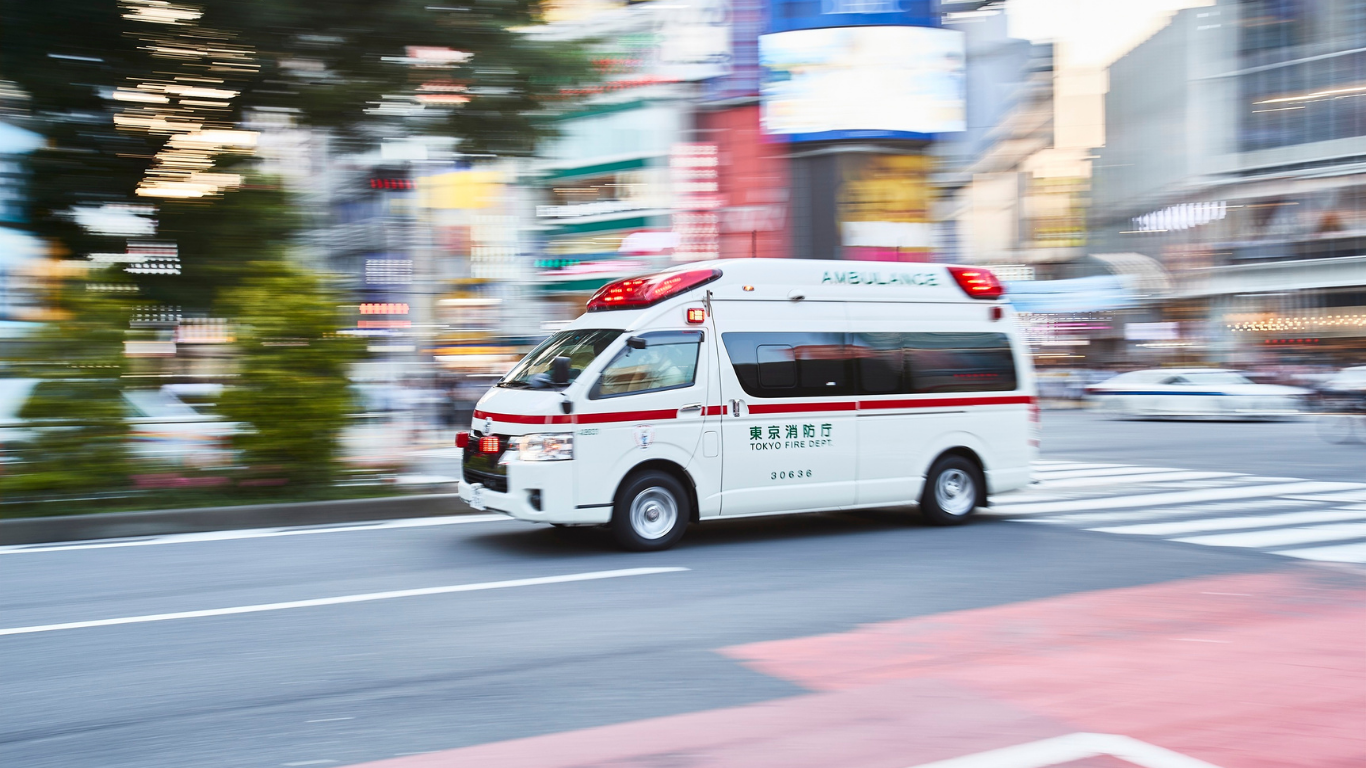
119 — Free Public Ambulance Transport
Calling for an emergency ambulance and being transported by Japan’s public ambulance service is free of charge, including for international visitors.
However, hospital consultations, examinations, medication, procedures and hospitalization may result in medical bills.
When calling, explain the situation and give your location. Use the address displayed at your hotel, nearest station, street sign or a recognizable landmark.
Simple English:
“Ambulance, please. We are at [location]. A person needs medical help. The problem is [describe symptoms].”
Useful Japanese:
「救急車をお願いします。」
Kyūkyūsha o onegaishimasu.
“Please send an ambulance.”
「住所は〇〇です。」
Jūsho wa [address] desu.
“The address is [address].”
If someone is unconscious, has severe breathing difficulty, experiences symptoms suggesting a stroke or heart attack, or suffers a serious injury, seek emergency help immediately.

EktaTraveling — Travel Insurance
Explore travel insurance options for your visit to Japan. Check the current policy’s medical-emergency benefits, exclusions, coverage limits and assistance arrangements before purchasing.
SEE PLANS
2. Police and Personal Safety in Japan
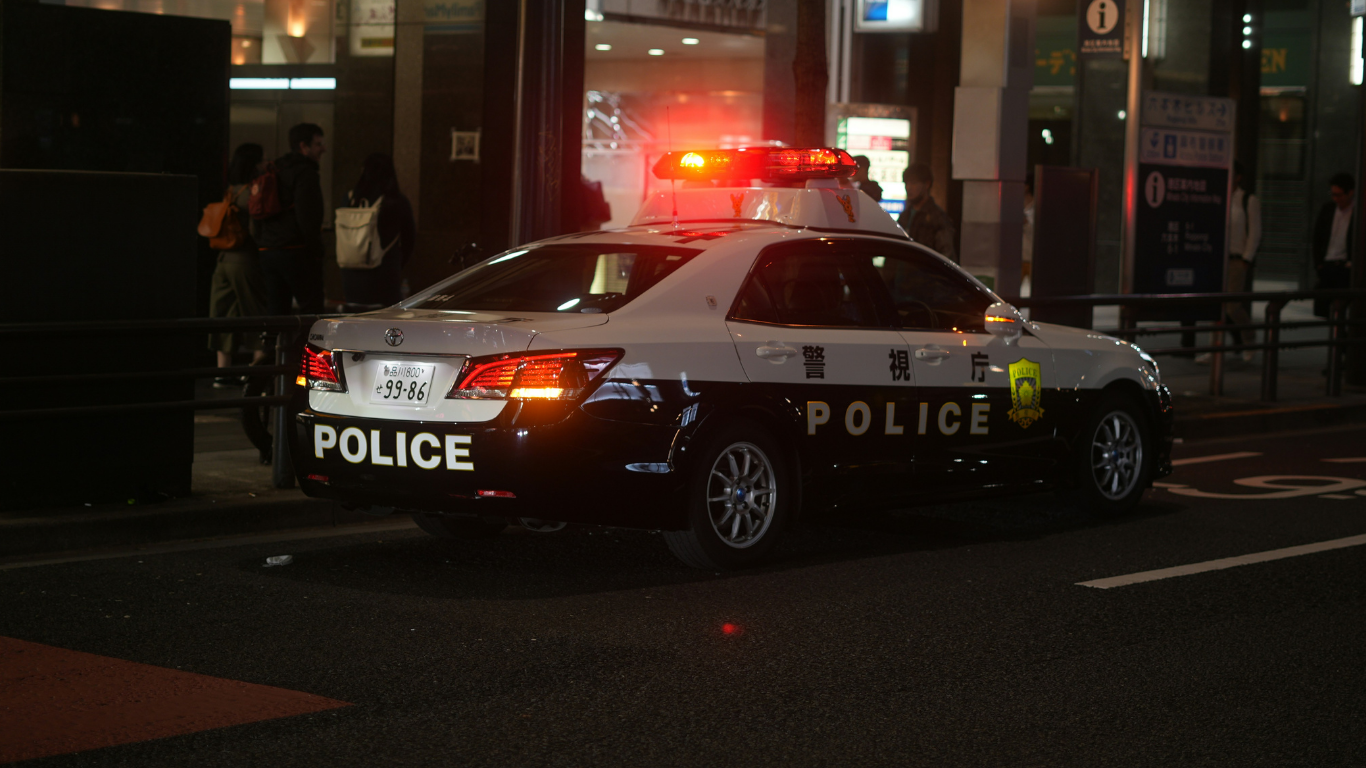
Japan is generally a safe and well-organized destination, but visitors should still know how to request help after theft, harassment, accidents or other unexpected incidents.
Police Emergencies: Call 110
Dial 110 when urgent police assistance is required.
Examples include a crime in progress, a serious threat to personal safety or a traffic accident requiring police intervention.
Be ready to explain what happened and where you are.
Simple English:
“Police, please. I am at [location]. There has been [describe incident].”
Useful Japanese:
「警察をお願いします。」
Keisatsu o onegaishimasu.
“Police, please.”
Do not call 110 merely because you misplaced an item and there is no urgent threat or crime in progress.
Kōban: Japan’s Neighborhood Police Boxes
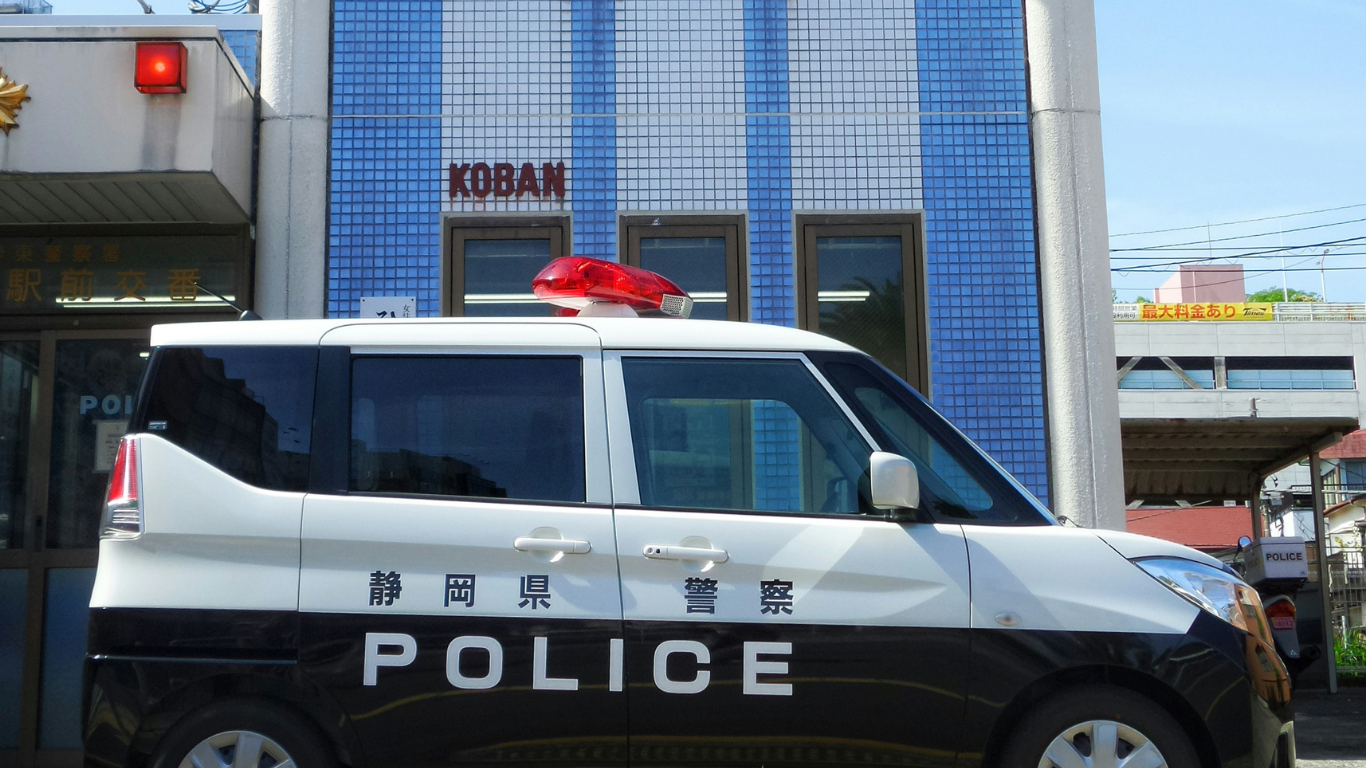
Kōban are small neighborhood police facilities commonly found near railway stations, shopping streets and residential districts.
They can help with:
- Reporting lost wallets, phones or passports.
- Asking for directions or local assistance.
- Reporting non-urgent incidents.
- Obtaining guidance after theft or minor problems.
If language is difficult, show a written description, a map or the relevant address on your phone.
Lost and Found: Recovering Your Belongings
Japan has well-established lost-property procedures. Items found by residents or transport staff are often reported to the appropriate service desk or police facility.
Recovery is never guaranteed, but acting quickly improves the chances of locating an item.
Lost Something on a Train?
- Contact the railway company or station staff as soon as possible.
- Provide the route, travel time, station and a description of the item.
- Keep any reference number given by the transport operator.
Lost Something in a Taxi?
Keep your taxi receipt: it may contain the company, vehicle identification or contact information needed to trace the journey.
Lost Something in a Shop or Mall?
Ask the customer-service desk or security staff. Large commercial facilities often maintain lost-property procedures.
Useful Japanese: 「落とし物はありますか?」 (Otoshimono wa arimasu ka?) — “Has a lost item been turned in?”
Lost Your Passport?
Report the loss to the police, contact your embassy or consulate and follow its instructions for replacement travel documents.
Foreign short-term visitors should carry their passport as required under Japanese immigration rules.
Embassy Emergency Assistance
Save your embassy or consulate’s contact information before traveling.
Consular staff may help with travel-document emergencies, contacting family members and explaining available local procedures.
They cannot automatically replace police, medical or legal services.
3. Weather, Earthquakes and Natural Hazards
Japan’s climate and geography vary greatly by region. A traveler may encounter summer heat in one area, mountain snow in another, or temporary disruption from heavy rain and strong winds.
This does not make Japan an unsafe destination. The practical advantage is knowing where to obtain reliable information and how to respond when advice is issued.
Everyday Weather Preparation
- Summer heat: drink water, take breaks, use air-conditioned facilities and recognize possible heat illness.
- Winter snow and ice: check forecasts and transportation before mountain travel; avoid slippery surfaces and unprepared hiking.
- Typhoons and heavy rain: check transport announcements and avoid unnecessary travel during severe conditions.
- Strong winds and lightning: follow local weather guidance and move into a suitable building when necessary.
Flooding: Know When to Move Away
Intense rainfall can cause urban flooding, river overflow and dangerous conditions in low-lying places.
Rain falling upstream can increase river levels even when the weather near your accommodation has improved.
During flood warnings:
- Avoid rivers, riverbanks, underpasses and flooded roads.
- Never walk or drive through water of unknown depth or current.
- Avoid underground shopping areas, basements and low-lying passages when flooding is possible.
- Check the hazard map for your accommodation and destination.
- Follow municipal evacuation instructions promptly.
Landslides and Mountain Areas
Heavy or prolonged rainfall can increase the risk of slope failures, landslides and falling rocks.
This is especially relevant for visitors traveling through mountain roads, hiking areas and accommodation near steep slopes.
Avoid unstable slopes, ravines and roads under official closure or warning.
Warning signs may include new cracks, falling stones or unusual water flow, but dangerous landslides can occur without obvious warning signs.
Do not wait for visible damage before following a local evacuation instruction.
Japan’s Five-Level Evacuation Framework
Japan strengthened its weather-warning terminology in May 2026 to align heavy-rain, flooding, landslide and storm-surge information more clearly with evacuation alert levels.
| Alert Level | What Travelers Should Understand |
|---|---|
| Level 1 | Review weather information and remain aware. |
| Level 2 | Check local risks, routes and evacuation options. |
| Level 3 | People needing extra time or assistance should evacuate dangerous areas. |
| Level 4 | Everyone in dangerous areas should evacuate. Do not wait for Level 5. |
| Level 5 | Life-threatening danger. Take the safest immediately available action if normal evacuation is no longer possible. |
Follow municipal evacuation orders and local conditions. Weather information and municipal instructions have different roles. Official reference: Japan Meteorological Agency, 2026 warning-system update.
Important: If evacuation outdoors has already become dangerous because of flooding, landslides or strong winds, moving to a safer part of a sturdy building may be preferable to attempting a hazardous journey. Follow local instructions and the actual conditions.
Earthquakes and Tsunami Warnings
Japan operates an advanced Earthquake Early Warning system. Alerts may appear on compatible phones, television, radio and other communication channels.
However, an earthquake may begin before an alert reaches the user, especially near the epicenter.
If You Feel Strong Shaking
- Indoors: protect your head, move away from falling objects, take cover when possible and avoid elevators.
- On a train: hold on, stay away from platform edges and follow staff instructions.
- Outdoors: move away from unstable walls, glass and falling objects when it is safe to do so.
- Driving: slow down and stop safely without creating additional danger.
Near the Coast: Tsunami Risk
If you experience strong or prolonged earthquake shaking near the coast, move immediately toward safe higher ground or an appropriate tsunami evacuation building.
Do not wait for a phone alert before taking protective action when the danger is evident.
Follow evacuation signs and official instructions. Do not return to coastal or riverside areas until authorities say it is safe.
Are All Evacuation Facilities the Same?
Two Japanese terms are particularly useful for tourists:
Evacuation Place and Shelter
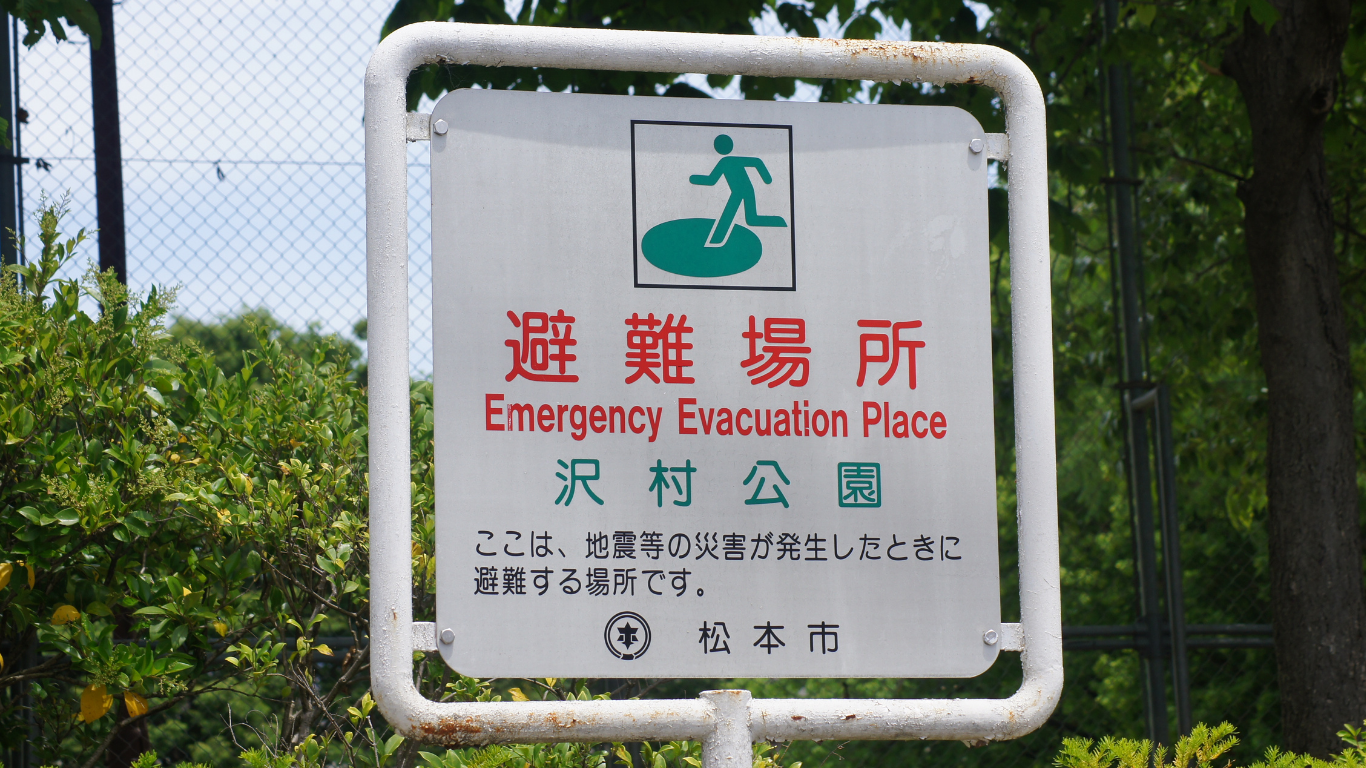
避難場所 — Hinan basho: a designated emergency evacuation place intended to provide safety from specified hazards.
避難所 — Hinanjo: a shelter used for temporary accommodation when people cannot safely remain in their homes or lodgings.
These are not always the same location, and a designated site may be suitable for some hazards but not others.
Ask your hotel where the appropriate evacuation location is for the risks affecting that particular area.
Official maps: Japan Hazard Map Portal .
El Niño and Japan’s Climate in 2026
In October 2026, the Japan Meteorological Agency reported exceptionally strong El Niño conditions, including a September sea-surface temperature anomaly of +4.0°C in its NINO.3 monitoring region.
El Niño can influence broader atmospheric circulation and seasonal weather patterns.
However, it would be misleading to attribute every recent typhoon, flood or landslide in Japan directly to El Niño.
Travelers should rely on current local forecasts, municipal guidance and official warnings rather than assuming that a large-scale climate pattern predicts conditions at their exact destination.
4. Japan’s Emergency Communication Network
One of Japan’s important strengths is that emergency information is delivered through several channels rather than a single system.
Mobile warnings, municipal loudspeakers, television, websites and special communication services can complement each other.
Will Earthquake Alerts Work on a Tourist’s Phone?
They may, but reception cannot be guaranteed for every device.
Phones purchased overseas, international roaming, travel eSIMs and particular hardware configurations may differ in their ability to receive Japanese cellular emergency broadcasts.
Having mobile internet access does not automatically mean every cellular emergency broadcast will be received.
Likewise, Wi-Fi-only access does not guarantee receipt of cellular broadcast warnings.
Safety tips: Official Alerts for Visitors
The multilingual Safety tips application provides notifications and information about earthquakes, tsunamis and severe weather in Japan.
It supports multiple languages, including Spanish.
Before traveling:
- Install the application.
- Enable notifications and location permissions as needed.
- Configure your preferred language and alert areas.
- Keep mobile data or suitable Wi-Fi available for app notifications.
Official information: Safety tips for Travelers .
The application complements other alert services, but no system guarantees warning before every earthquake.
Municipal Loudspeakers: Bōsai Gyōsei Musen
Throughout Japan, local governments use disaster- prevention communication systems known as 防災行政無線 (Bōsai Gyōsei Musen).
Outdoor loudspeakers are a familiar part of this municipal infrastructure in many communities.
Depending on the municipality, they may announce:
- Weather emergencies and evacuation information.
- Fire and public-safety notices.
- Information about missing persons.
- System tests and routine community messages.
Not every loudspeaker message means an emergency. Some communities broadcast scheduled melodies or regular test announcements.
If you hear an announcement that you do not understand, remain calm and check with hotel staff, local officials or municipal information channels.
If an official evacuation instruction applies to your area, act without unnecessary delay.
Useful Japanese:
「アナウンスが分かりません。」
Anaunsu ga wakarimasen.
“I don’t understand the announcement.”
「避難場所はどこですか?」
Hinan basho wa doko desu ka?
“Where is the evacuation place?”
Emergency Wi-Fi: 00000JAPAN
Emergency Network Name (SSID)
Japan has a disaster-response Wi-Fi initiative that can be activated by participating operators during major disasters or significant communication disruptions.
The network name has five zeros, followed by the word JAPAN.
How to Connect
- Open your phone’s Wi-Fi settings.
- Look for the exact network name 00000JAPAN.
- Select it. No ordinary subscriber contract or password is required.
- Use the connection to check official updates and contact others when services are available.
The network is not continuously available everywhere. Activation depends on the affected area, participating operators and functioning network equipment.
Because it is an open Wi-Fi network, avoid unnecessary sensitive transactions and use secure websites and applications.
Information: Wi-Biz — 00000JAPAN .
Disaster Message Service: 171
Japan also has disaster message services, including 171 (災害用伝言ダイヤル).
These services may be activated during major disasters to help people leave and retrieve safety messages.
Availability and instructions depend on the service and network conditions.
International tourists should not assume that every foreign telephone number or device will work with every disaster message service.
171 is not a replacement for the emergency numbers 110, 119 or 118.
NHK: Television and Online Emergency Information
NHK, Japan’s public broadcaster, is an important source of information during significant emergencies.
NHK General television normally broadcasts in Japanese and is commonly available on channel 1, depending on the region and equipment.
International visitors who do not understand Japanese can consult NHK WORLD-JAPAN online for news and emergency-related coverage.
Its international services provide news primarily in English, with additional language services including Spanish.
Not every broadcast or live update is simultaneously available in every language.
NHK news complements official information. For evacuation orders, follow local authorities and the relevant government warning services.
Reliable Official Information Sources
Save These Links Before Traveling
- Japan Meteorological Agency (JMA) — Weather, earthquakes, tsunamis and official warnings.
- JMA Disaster Information — Current warning and hazard information, including relevant risk maps.
- Japan Hazard Map Portal — Location-based hazard information.
- JNTO Japan Safe Travel Information — Disaster and travel-safety information.
- Safety tips App — Multilingual emergency notifications.
- NHK WORLD-JAPAN — International news and updates.
5. A Simple Preparation Checklist
Most trips to Japan proceed without serious incidents. A few simple preparations can nevertheless make travel easier and more comfortable.
- Save 110, 119, 118 and the JNTO Visitor Hotline.
- Install Safety tips and enable notifications.
- Keep a charged phone and a portable power bank.
- Save your hotel address in Japanese.
- Ask where the nearest appropriate evacuation place is located.
- Keep essential medicine, insurance details, some cash and emergency contacts accessible.
- Check official forecasts before mountain, coastal or long-distance travel.
- Remember the emergency Wi-Fi name 00000JAPAN.
- Follow instructions from local authorities and transportation staff.
Japan: Safety Through Preparation and Organization
Japan is an inviting and well-organized destination for international travelers.
Its approach to safety is supported by practical infrastructure, emergency services, local authorities and multiple communication systems.
The purpose of this guide is not to make visitors expect a disaster.
It is to help them understand the systems Japan has developed to protect people and to know how to use those systems when assistance is needed.
Good preparation makes travel more reassuring.
Enjoy Japan with confidence, stay informed and respect the instructions of the people responsible for public safety.
Official Sources and References
- Japan National Tourism Organization. Japan Visitor Hotline and emergency contacts. Official JNTO Information
- Japan Meteorological Agency. Emergency warnings and five-level evacuation information framework. JMA Emergency Warnings
- Japan Meteorological Agency (2026). Changes to weather disaster warnings. 2026 Warning System
- Japan Meteorological Agency (October 2026). El Niño monitoring report. El Niño Monitoring
- Ministry of Health, Labour and Welfare. Bringing medicines into Japan. Medication Import Guidance
- Japan Tourism Agency / JNTO. Safety tips application for international travelers. Safety tips
- Ministry of Land, Infrastructure, Transport and Tourism. Disaster-prevention information and hazard-map resources. MLIT Disaster Prevention Portal
- Wi-Biz. 00000JAPAN disaster-response Wi-Fi. Emergency Wi-Fi Information
- NHK WORLD-JAPAN. International news and information. Official NHK WORLD-JAPAN